
The argument in favor of using filler text goes something like this: If you use any real content in the Consulting Process anytime you reach.



How to Research the History of Your Old House
Start With What You Already Have
Before you set foot in an archive, gather everything already in your possession. The deeds, if you have them, are the obvious starting point, but they are not the only documents that live in the house. Old insurance schedules, mortgage papers, probate inventories, even a faded builder's name pencilled on a beam can give you a date and a name to chase. Photographs are just as valuable: a picture of the front elevation from the 1950s may show a doorway, window or porch that has since vanished, and that evidence can help you decide whether a feature is original or a later addition.
Make a simple file, physical or digital, with a section for each room and each elevation. Note anything that looks altered: a blocked doorway, a change in brick colour, a beam that does not quite line up with the joists beside it. These small inconsistencies are the questions you will take to the records, and having them written down stops you from being distracted by the romance of a grand previous owner and missing the plain facts.
Deeds, Title Registers and the Paper Trail
If you own the freehold and the property is registered, you can download the title register and title plan from the Land Registry for a modest fee. These will not usually give you a full history, but they will confirm the legal description, any covenants and the date of first registration, which is often a useful anchor. Unregistered properties, particularly older ones, still rely on the physical deeds, so if yours are held by a solicitor or a bank, ask for them. Deeds often recite earlier transactions in a chain, taking you back decades in a single document.
Beyond the deeds, look for:
- Abstracts of title, which summarise ownership over long periods and frequently name occupiers and tenants.
- Conveyances and mortgages, which may include plans showing outbuildings, boundaries and wells.
- Manorial records, held at county record offices, which can cover copyhold properties before enclosure.
- Tithe apportionment maps and awards from around 1840, which name owners and occupiers plot by plot.
Maps That Date Your House and Its Changes
Maps are the quickest way to see how your house and street have changed. Ordnance Survey county series maps from the 1840s onwards, usually at 1:2,500 for built-up areas, show individual buildings and are often available at your local record office or reference library. Compare successive editions and you can watch a rear wing appear, an orchard disappear or a terrace extend along the road. Enclosure maps, estate maps and the earlier large-scale town plans fill in the gaps before the Ordnance Survey.
Look carefully at how your plot is drawn. A house that sits slightly out of line with its neighbours may predate the terrace around it, while a boundary that cuts awkwardly across a garden often marks where land was sold off later. If a building appears on one edition and not the next, you have a rough date bracket, and that is far more useful than a vague guess.
Census Returns, Directories and Rate Books
The census is free to search at the National Archives and many libraries, and returns from 1841 to 1921 are available. They give you names, ages, occupations and birthplaces, which turn a house into a home with people in it. Follow a family across decades and you can see when they arrived, when they left and whether lodgers or servants shared the space. Trade directories, published every few years, list householders and businesses, and they often bridge gaps where census pages are illegible.
Rate books and poor rate assessments, held at county record offices, record who paid rates on a property and can sometimes show the date a new building first appears. Electoral registers add another layer, and once you have a name, parish registers for baptisms, marriages and burials can confirm family details. All of this is patient work, but it is the difference between a house with a date and a house with a story.
Dating Architectural Features Accurately
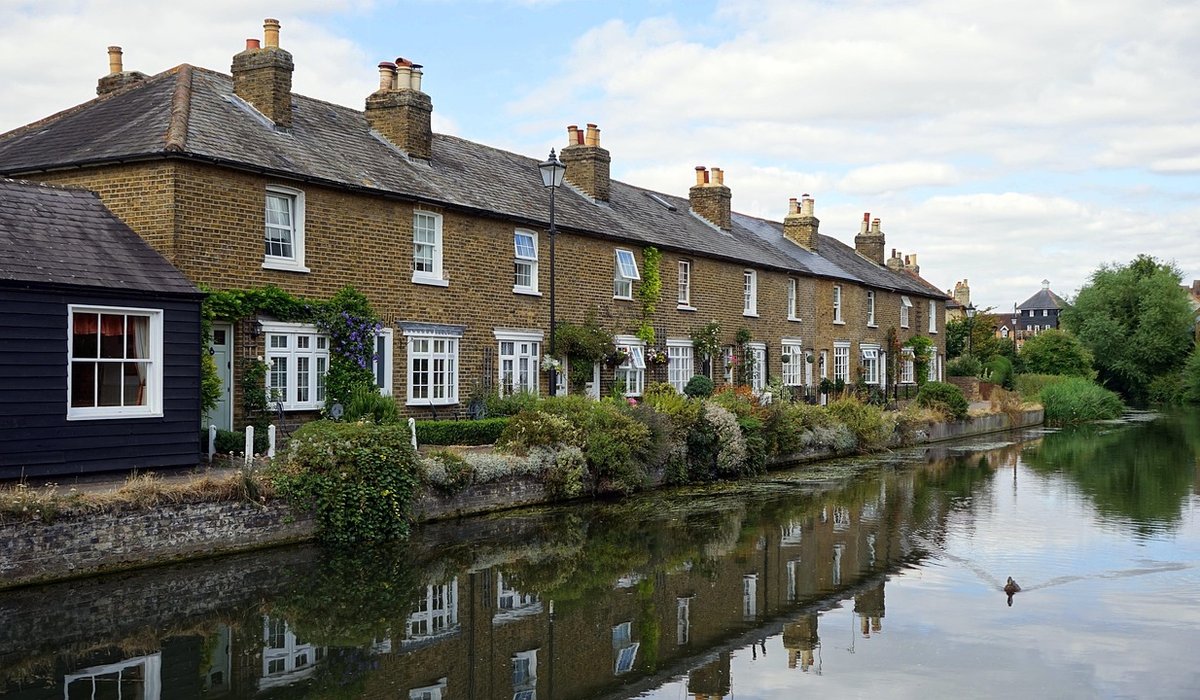
Documents tell you when people were there; the fabric tells you when the house was built and altered. Learn to read the building itself. Brickwork is one of the best guides: handmade bricks with irregular edges and wide, lime-rich mortar suggest the seventeenth or early eighteenth century, while uniform machine-made bricks and hard cement mortar point to the nineteenth century or later. Look at the bond, the pattern in which bricks are laid, and note any changes where a wall has been extended.
Windows are equally revealing. Timber casements with small leaded panes, then sash windows with thick glazing bars, then plate glass and horned sashes, each belongs to a recognisable period, and a window that interrupts a surrounding brick pattern is probably a later insertion. Roof timbers matter too: heavy, roughly hewn oak with pegged joints is likely pre-1750, while sawn softwood with machine-cut nails is later. Chimney stacks, door surrounds, plaster cornices and floorboards all carry similar clues.
Where you are unsure, a measured drawing and a photograph of the detail sent to a local historic buildings officer or an architectural historian can bring an expert opinion at very little cost. Combine that with your documents, and you will have a properly evidenced history rather than a hopeful guess. Older homes reward curiosity, and every archive visit tends to answer one question while raising two more, which is exactly what makes the research so enjoyable.

Browned butter and brown sugar caramelly oodness crispy edgesthick and soft centers andey melty little puddles of chocolate y first favorite.Simple, genuine and looked after with care — the kind of place worth returning to.
Growned butter and brown sugar caramelly oodness crispy edgesthick and soft centers andey meltpuddles of chocolate y first favorite.Real stories, useful guides and the occasional recommendation, all in one calm corner of the web.
Give tired furniture a new lease of life with chalk paint, wax and simple repairs. These projects suit traditional country interiors without costing a fortune.
Thomas A. Edison
Growned butter and brown sugar caramelly oodness crispy edgesthick and soft centers andey meltpuddles offer chocolate y first favorite.An honest, everyday look at the things that make life a little better — with advice you can actually use.e breathing, we blessed. Surround yourself with angels.

Customer Engagement Marketing New Strategy for the Economy
Even a tiny garden can support birds, bees and butterflies. Add nectar-rich flowers, a small pond and log piles to create a thriving wildlife haven.
- Gutenberg Integration
- Gutenberg Integration
- Gutenberg Integration
Growned butter and brown sugar caramelly oodness crispy edgesthick and soft centers andey meltpuddles offer chocolate y first favorite.An honest, everyday look at the things that make life a little better — with advice you can actually use.e breathing, we blessed. Surround yourself with angels.

Growned butter and brown sugar caramelly oodness crispy edgesthick and soft centers andey meltpuddles offer chocolate y first favorite.Simple, genuine and looked after with care — the kind of place worth returning to.e breathing, we blessed. Surround yourself with angels.

Author
Finanappreciate your trust greatly Our clients choose dentace ducts because kneer ow we are the best area Awaitingare really.

Previous Post


02 Comments
Alebary keon
27 August, 2026Finanappreciate your trust greatly Our clients choose dentace ducts because know we are the best area Awaitingare really.
Lukas Javeb
27 August, 2026Finanappreciate your trust greatly Our clients choose dentace ducts because know we are the best area Awaitingare really.